
Off-Grid Solar Systems
Complete Energy Independence with Battery BackupAn Off-Grid Solar System is designed for homes and businesses in remote areas or for those who want full energy independence. It works entirely without the utility grid, using solar panels to generate electricity and batteries to store power for nigh ttime and cloudy days.
This system ensures a reliable, uninterrupted power supply, making it ideal for locations with frequent power cuts or no grid access at all.
Why Choose an Off-Grid Solar System?

Energy Independence
Generate and store your own power without relying on the utility grid.

Uninterrupted Power Supply
Enjoy continuous electricity even during power cuts or grid failures.

Battery Storage
Store excess energy for use at night and on cloudy days.

Eco-Friendly
Run your home completely on clean and renewable solar energy.

Scalable
Easily expand your system with additional panels and batteries.

Reliable Investment
Long-lasting performance with 25+ years of solar panel life.
How an Off-Grid Solar System Works
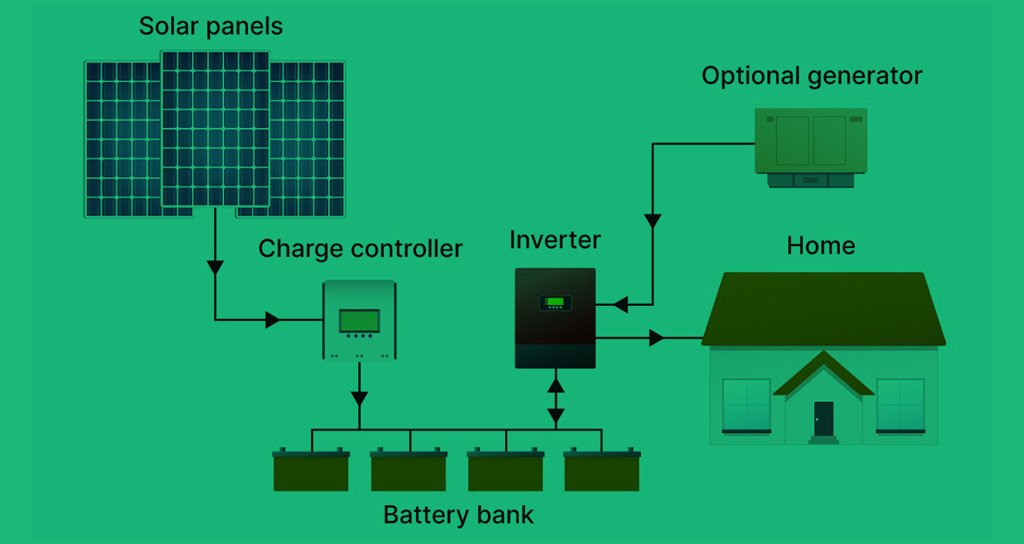
- Solar Panels – Capture sunlight and convert it into DC electricity.
- Charge Controller – Regulates power flow to batteries and appliances.
- Battery Bank – Stores excess energy for night time or cloudy weather.
- Solar Inverter – Converts DC into AC electricity for household use.
- Independent Supply – Delivers power without relying on the utility grid.
Ideal For
- Remote homes, farmhouses, and cabins without grid access.
- Areas with frequent power outages and unreliable supply.
- Eco-conscious families who want 100% renewable energy.
- Small industries and agricultural operations in off-grid areas.
Frequently Asked Questions
Unlike on-grid systems, off-grid solar operates independently of the utility grid, using batteries to store energy for 24/7 availability.
Yes. Excess energy produced during the day is stored in batteries, which supply electricity during the night or cloudy weather.
Yes. Since batteries are required, off-grid systems have a higher upfront cost. However, they offer complete energy independence and savings in areas without reliable grid supply.
Battery life depends on usage and type. Typically, lithium batteries last 8–12 years, while lead-acid batteries last 5–7 years with proper maintenance.