

Hybrid Solar Systems
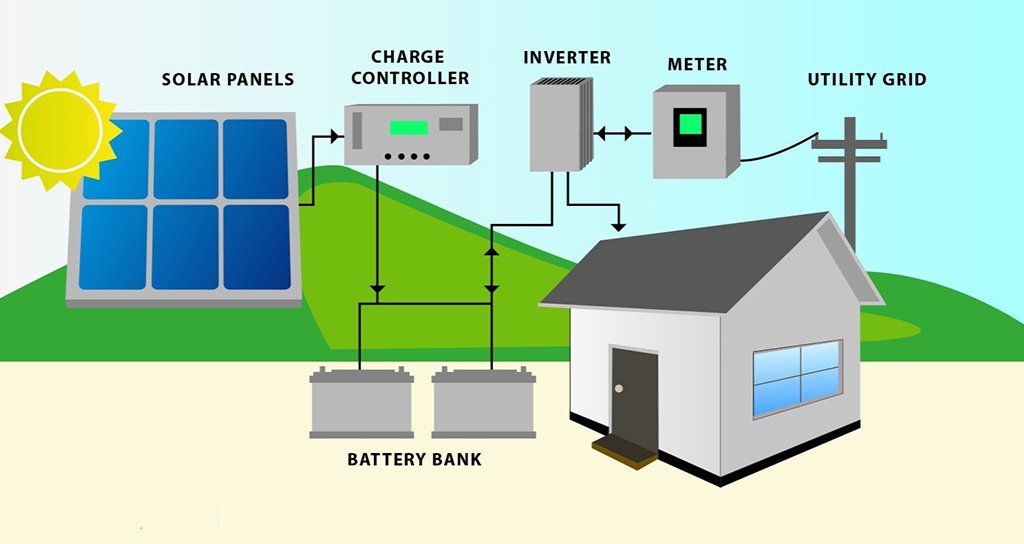
Best of Both Worlds – Grid + Battery BackupA Hybrid Solar System combines the benefits of both On-Grid and Off-Grid systems. It connects to the utility grid while also using batteries for backup storage. This means you can enjoy the savings of net metering while having power security during outages.
Hybrid systems are perfect for those who want to lower their electricity bills and also have backup power when the grid fails.
Why Choose a Hybrid Solar System?

Power Backup
Keep your appliances running even during grid failures with battery storage.

Net Metering
Send excess solar power to the grid and earn credits on your bill.

Energy Independence
Reduce reliance on the utility grid with your own stored energy.

Cost Savings
Save on electricity bills while securing reliable backup power.

Smart Energy Management
Use solar, grid, and battery power efficiently with advanced inverters.

Reliable Investment
Hybrid systems provide flexibility and long-term energy security.
How a Hybrid Solar System Works
- Solar Panels – Capture sunlight and generate DC electricity.
- Hybrid Inverter – Converts DC into AC and manages grid + battery usage.
- Battery Bank – Stores extra energy for backup and nighttime use.
- Net Metering – Transfers excess power to the grid for credits.
- Utility Grid – Provides power when solar and batteries are low.
Ideal For
- Homes that want backup during power cuts but also grid savings.
- Businesses and offices needing uninterrupted operations.
- Areas with frequent blackouts and net metering policies.
- Customers who want both cost savings and energy security.
Frequently Asked Questions
The biggest advantage is that it provides both net metering savings and backup power during outages, offering flexibility and reliability.
Yes. Since it includes batteries, hybrid systems have a higher upfront cost. However, they provide backup power and long-term savings.
Yes. Hybrid systems are designed to keep your essential appliances running during outages with stored battery power.
Most hybrid solar installations are completed within 3–6 days, depending on system size and battery capacity.